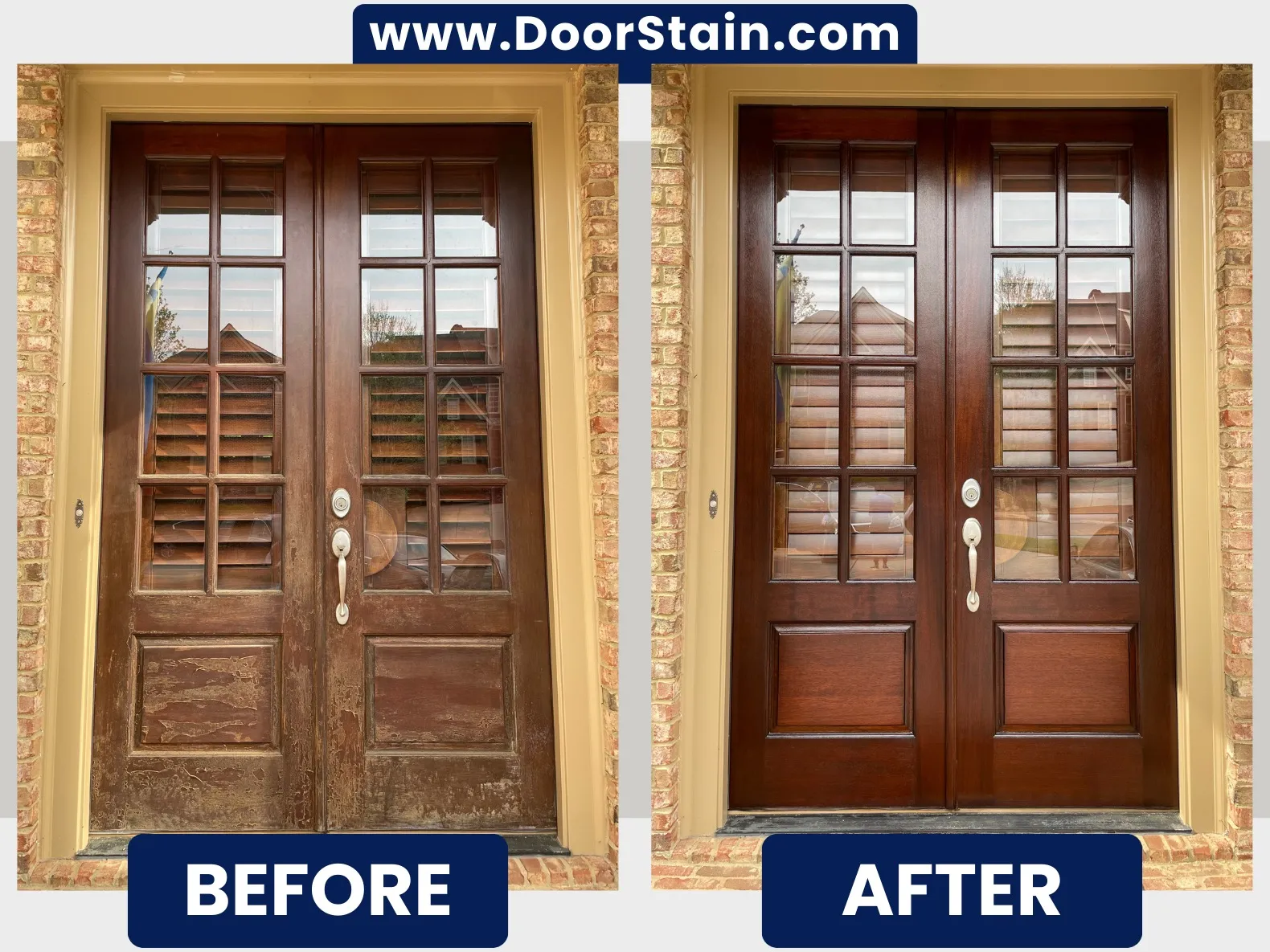
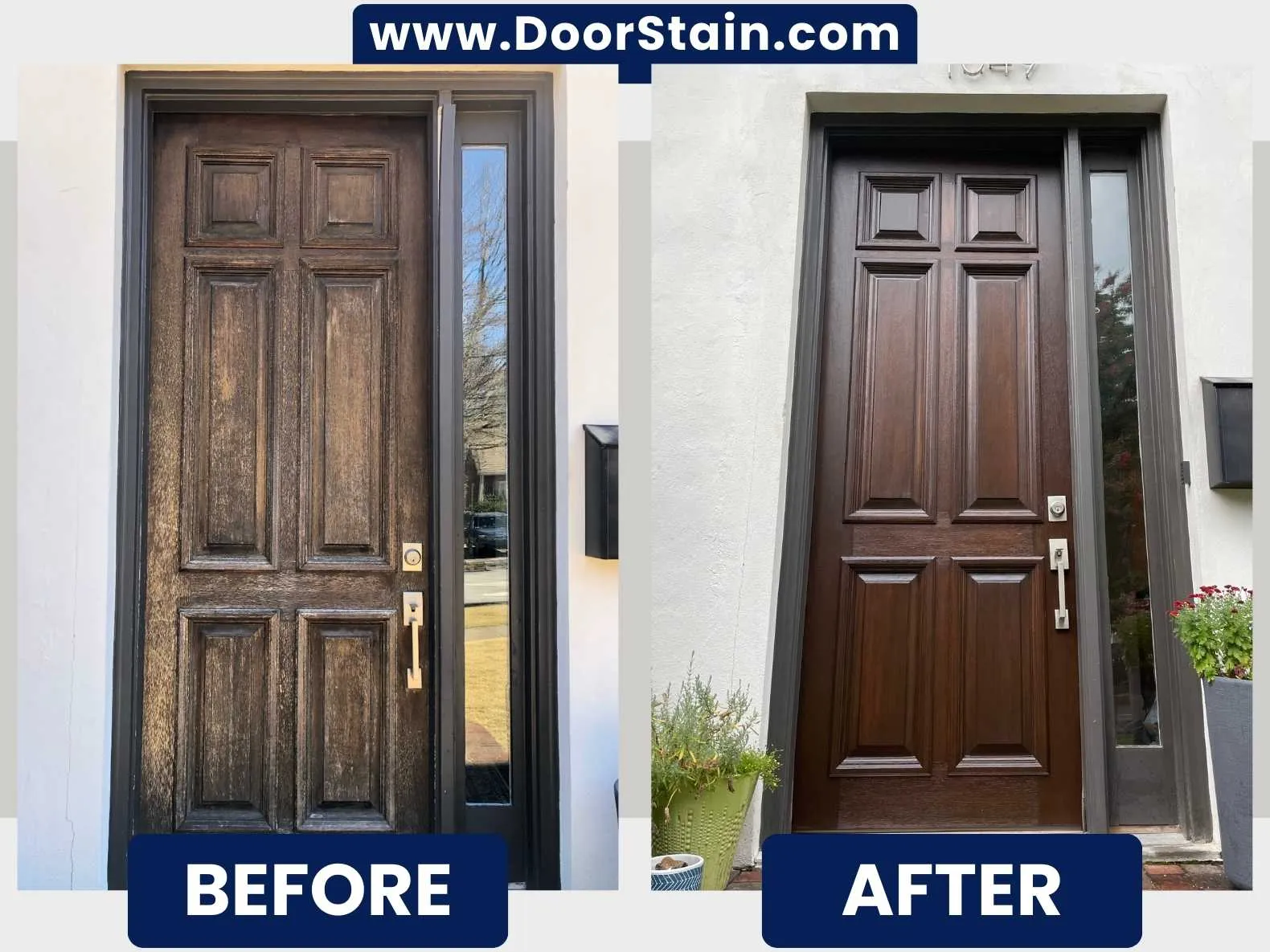
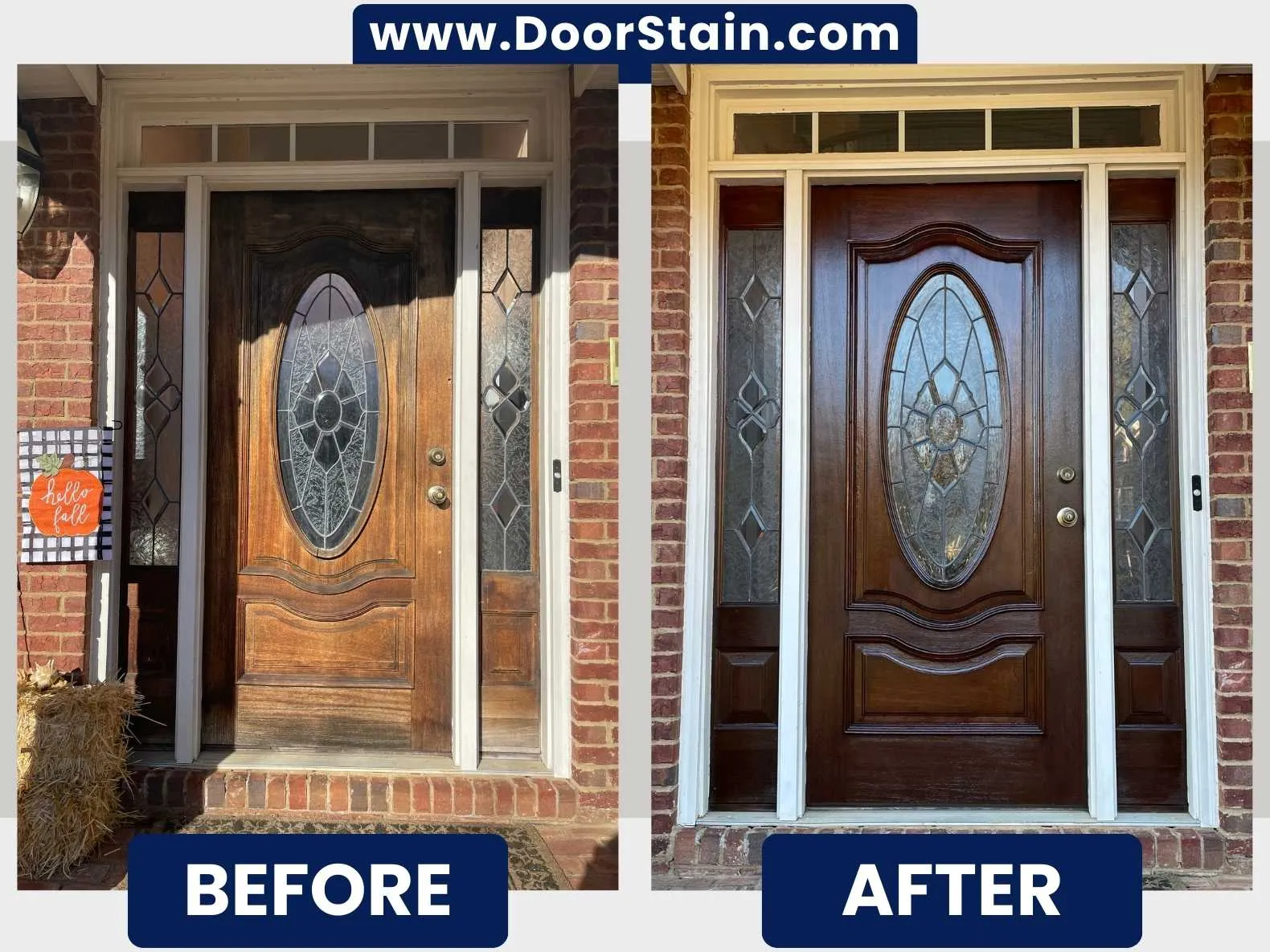
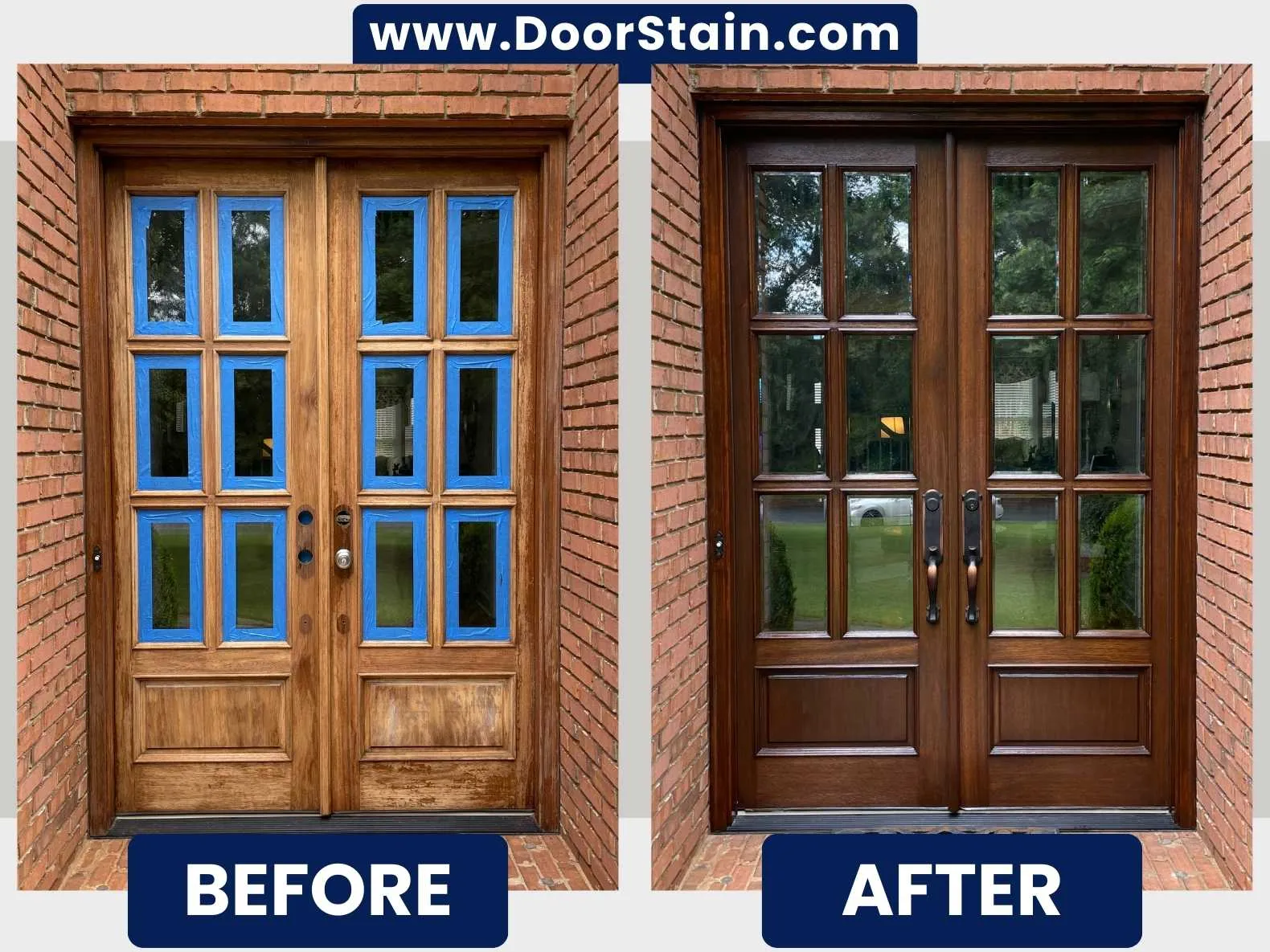
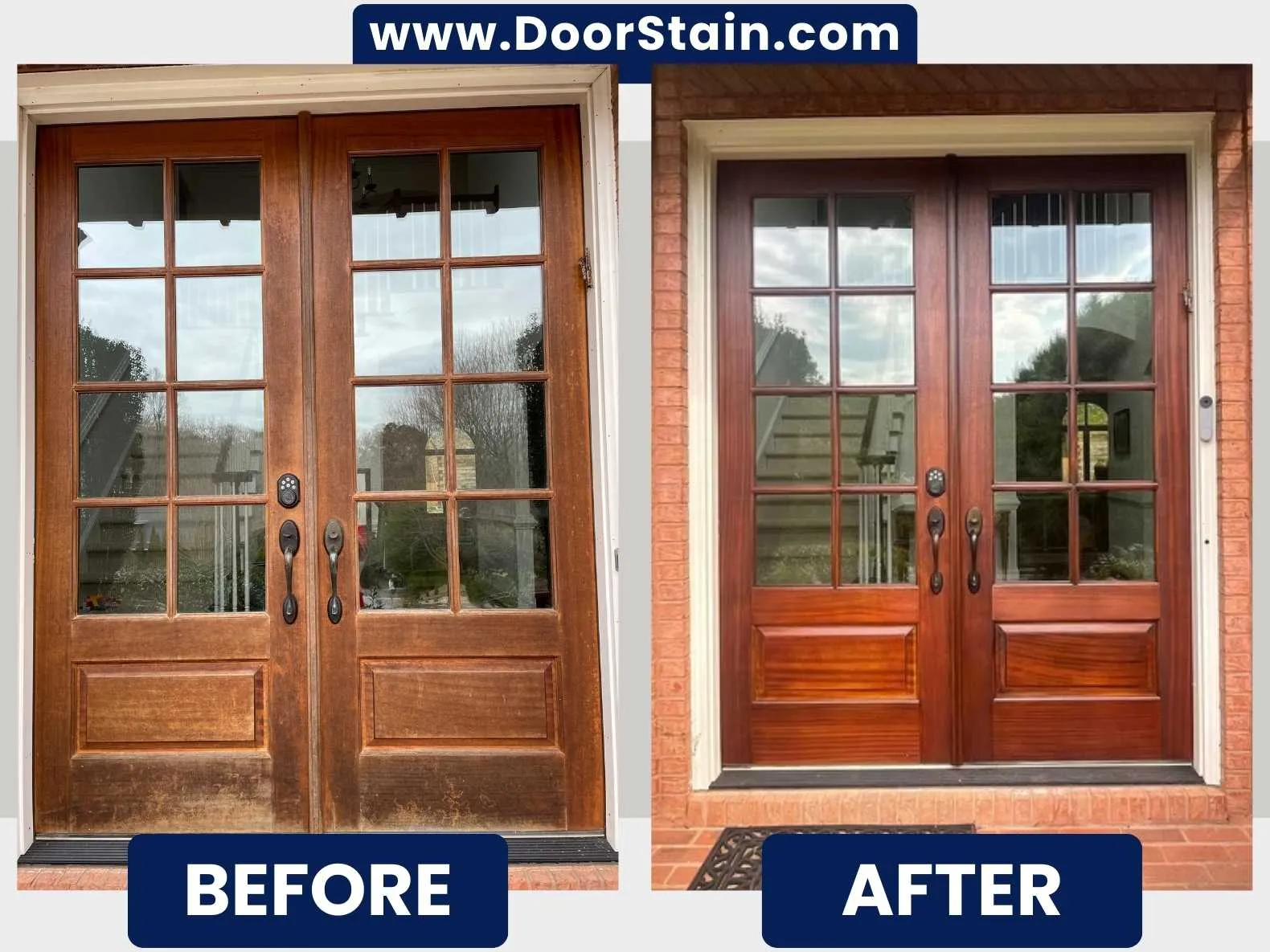
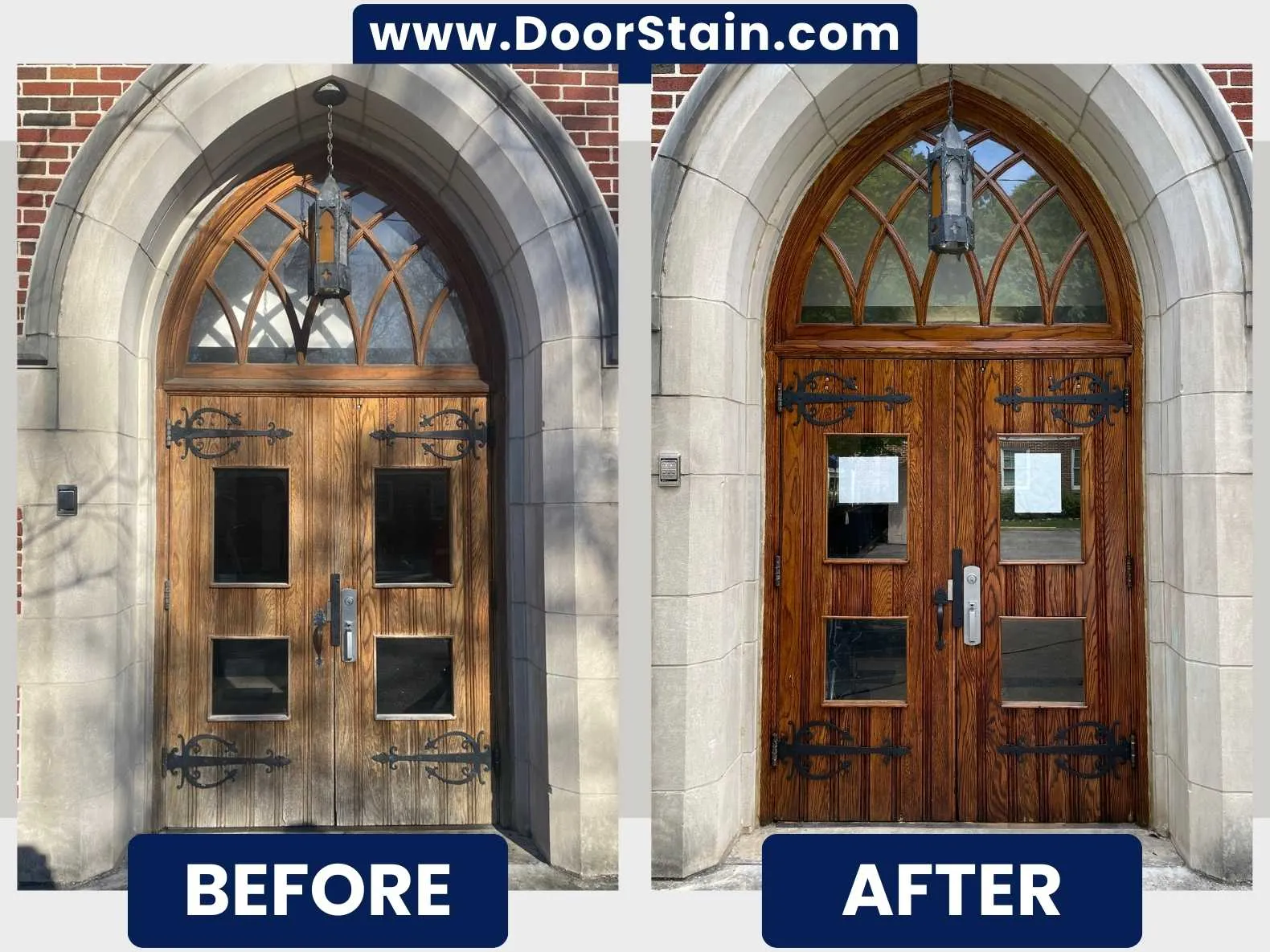
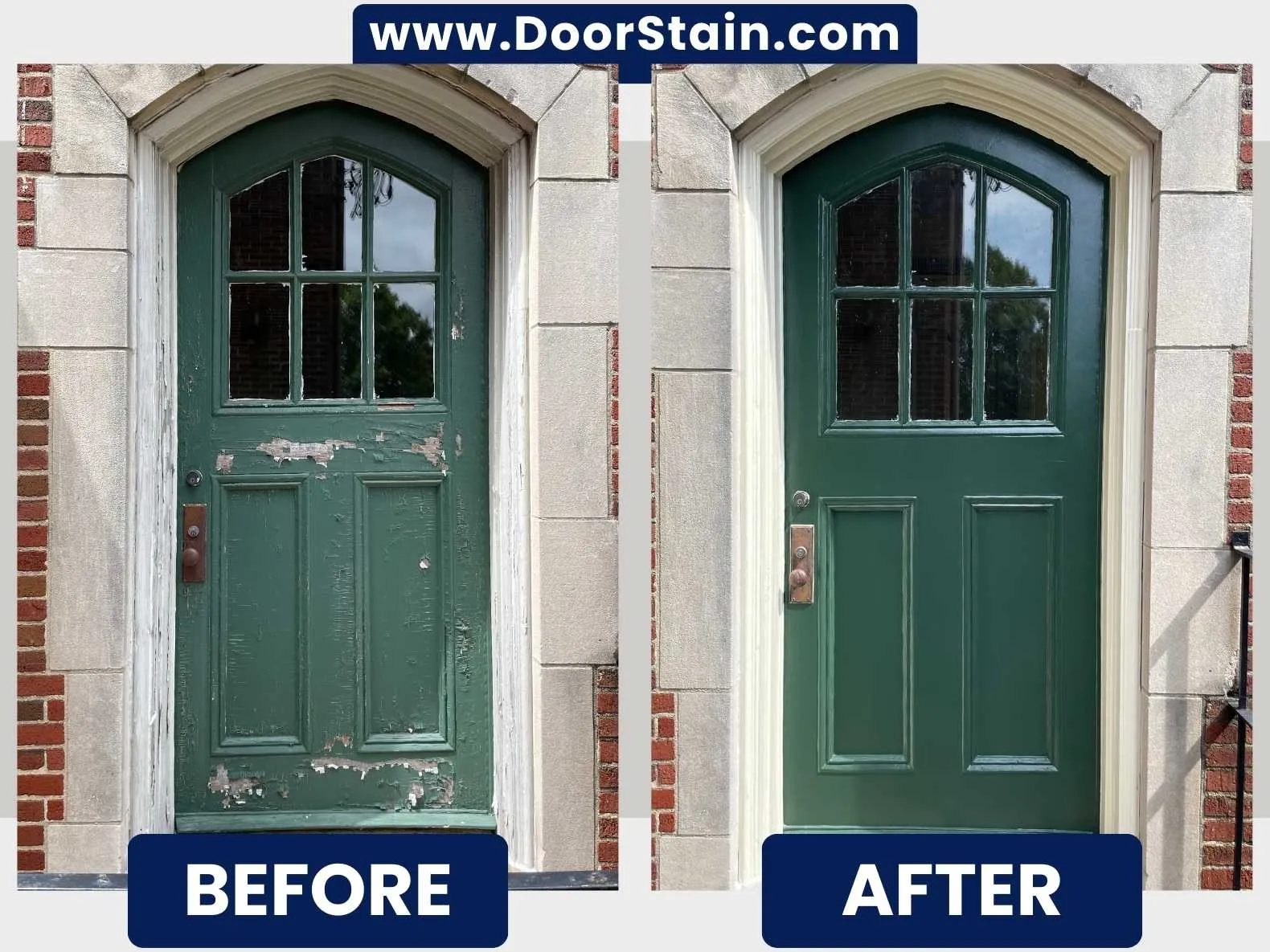
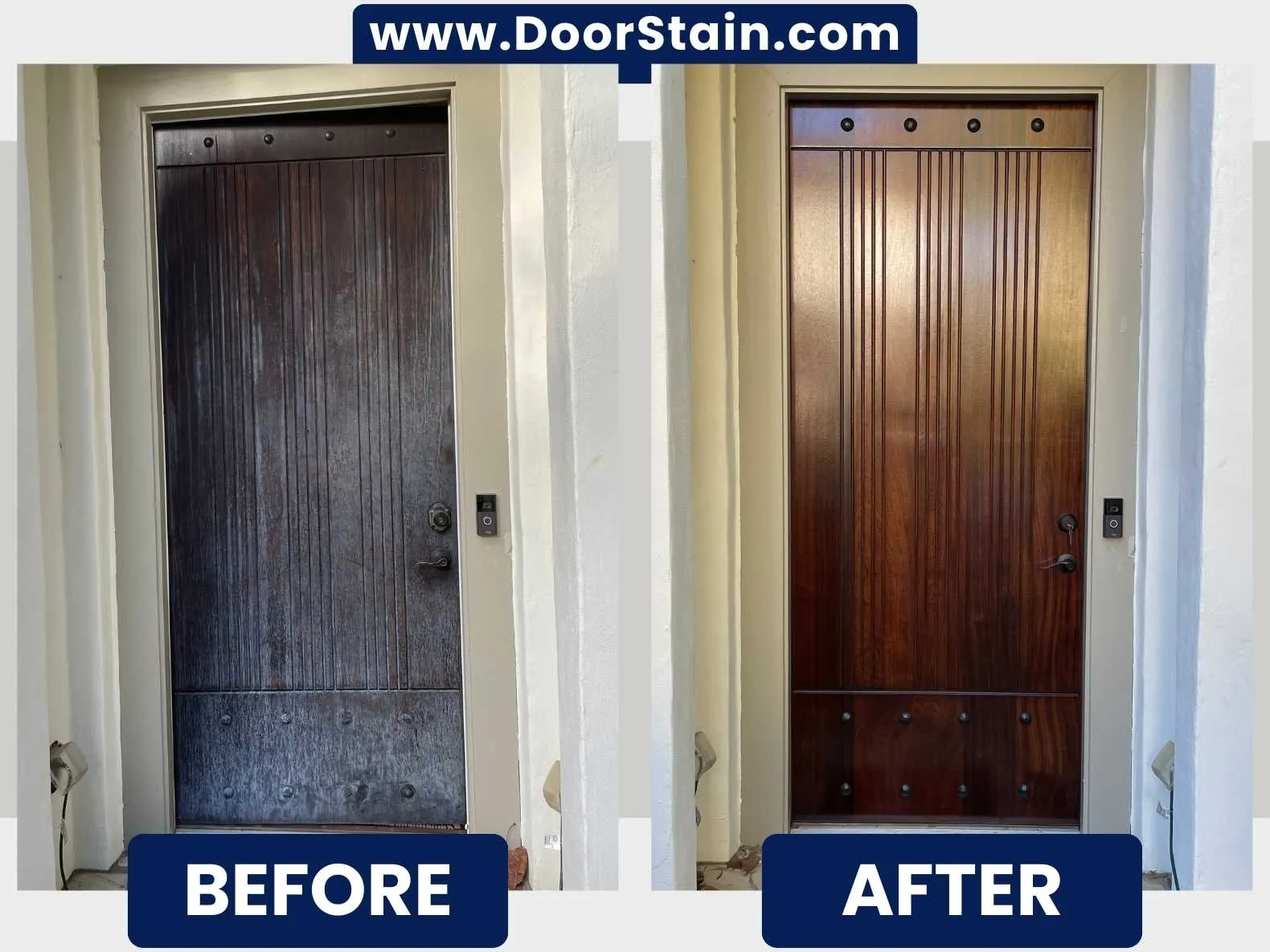
People are often surprised to learn that a tired, faded fiberglass door doesn’t have to be replaced — it can be refinished to look like rich, freshly stained wood. Fiberglass door refinishing in Atlanta uses gel stain worked into the door’s molded grain and sealed under a UV-protective clear coat, restoring that warm wood look without the cost of a new door. And like all our work, it’s done on-site: we bring our mobile workshop to your driveway, with no storefront and no drop-off.
Fiberglass entry doors are popular across Metro Atlanta because they resist dents and don’t rot. But their one weakness is the finish. The factory stain-and-clear-coat is usually thin, and under Georgia’s relentless UV it fades, goes blotchy, or turns chalky within a few years. With over 15 years refinishing doors of every material, we’ve dialed in a gel-stain process that makes fiberglass look convincingly like real wood again.
What fiberglass door refinishing includes
Refinishing fiberglass is a different craft than refinishing wood — you’re working with a molded grain texture and a non-porous substrate, so technique and product selection are everything. Our fiberglass door staining in Atlanta includes:
- Cleaning and de-glossing the existing finish
- Removing failed, blotchy, or peeling factory clear coat
- Applying gel stain worked into the molded wood-grain texture
- Building translucent color to match or refresh your look
- Sealing with UV-protective clear coat
- Detailing edges, glass surrounds and hardware
Glass inserts, sidelights, weatherstripping and surrounding masonry are all masked and protected before any product touches the door.
Our on-site gel-stain process
1. Clean and de-gloss
Fiberglass is non-porous, so adhesion is the whole game. We thoroughly clean the door to remove dirt, oils and old wax, then de-gloss the surface so the new stain and clear coat bond properly. Skipping this step is why amateur fiberglass refinishes peel.
2. Remove failed finish
Where the factory finish has gone blotchy, chalky or is peeling, we remove it so the new color goes down evenly. Uneven old finish telegraphs through, so we make sure we’re starting from a sound, uniform base.
3. Apply gel stain into the grain
This is the heart of the job. Gel stain has body, so it sits in the molded grain and builds translucent, wood-like color rather than soaking in like a wood stain would. We work it into the grain by hand and wipe to control depth, building tone in layers for a realistic, even result.
4. Seal with UV clear coat
Once the color is right and cured, we lock it in with an industrial UV-protective clear coat. This is what gives the door its sheen and, critically, its resistance to the Atlanta sun that wrecked the original factory finish.
5. Inspect and reinstall hardware
Hardware goes back, glass is cleaned, and we walk the finished door with you. Most fiberglass doors are completed in a single day.
Signs your fiberglass door needs refinishing
- The finish looks faded, washed-out, or chalky
- Color has gone blotchy or uneven, especially on the sunny side
- The original clear coat is peeling or flaking
- The wood-grain look has dulled to a flat, lifeless tone
- The door looks plasticky where it used to look like wood
- Whitish hazing on the surface (UV-degraded clear coat)
Stains and finishes we use on fiberglass
The right product makes or breaks a fiberglass refinish. We use gel stains specifically because their thicker body clings to non-porous fiberglass and fills the molded grain with believable, layered color. For protection, we seal with industrial UV-protective clear coat rather than the thin factory-style finish — Georgia’s UV is what destroyed the original, so we upgrade the topcoat to something built to resist it. The combination produces a finish that looks like hand-stained wood and stands up to real Atlanta weather.
How Georgia’s climate affects fiberglass doors
Fiberglass itself shrugs off humidity and won’t rot, which is a real advantage in Atlanta’s wet climate. The vulnerability is purely the finish. Direct UV on a south- or west-facing door breaks the bonds in the factory clear coat, and once that protective layer degrades, the stain underneath fades and goes blotchy fast. Because the substrate is sound, refinishing is almost always worthwhile — we simply restore the color and reseal with a tougher, UV-stable topcoat. That upgrade is exactly why the refinished door outlasts the original and why we can back it with a one-year craftsmanship warranty.
Why refinish instead of replacing your fiberglass door?
A new fiberglass entry door, with hardware and installation, can run well over a thousand dollars — and there’s nothing structurally wrong with a faded fiberglass door. The door slab is fine; only the finish failed. Refinishing typically runs $500 to $1,100, restores the wood-grain look completely, and skips the cost and disruption of a replacement. For a door that’s simply lost its color, refinishing is the obvious choice.
Pricing guidance
Realistic ranges for fiberglass door refinishing:
- Single fiberglass door: $500–$750
- Double fiberglass door or door with sidelights: $750–$1,100
- Severe blotching or heavy old-finish removal can affect the total
To get an exact quote, text a photo of your door to (470) 333-6655. A clear, straight-on photo lets us confirm the grain pattern and condition and send you a price, usually the same day.
What to expect on the day
When we arrive, we’ll set up in your driveway and confirm the stain tone with you before any product goes on the door — fiberglass takes color a little differently than wood, so we’ll often do a small test area first so you can see the depth and undertone you’re getting. While the gel stain and clear coat flash and cure between coats, your door area stays protected and we keep the opening covered as needed. Because gel stain builds color in layers and the clear coat needs proper cure time, we don’t rush the coats; that patience is exactly what gives a fiberglass refinish its convincing, wood-like depth and its longevity. Before we pack up, we clean the glass, reinstall hardware, and walk the finished door with you so you can sign off on the color and sheen in daylight.
A note on fiberglass vs. wood doors
Homeowners sometimes ask whether they should “just replace it with wood.” For many Atlanta homes, fiberglass is actually the better long-term choice — it won’t rot, warp, or swell in our humidity the way wood can, and the only thing that ever failed was the thin factory finish. Once we re-stain and seal it with a proper UV clear coat, you get the warm look of stained wood with none of the maintenance headaches wood brings in this climate. That’s why so many of our fiberglass refinish customers are thrilled to keep the door they already have.
Get your free quote today
Don’t replace a fiberglass door that just needs new color and protection. Our on-site fiberglass door refinishing in Atlanta uses gel stain and UV clear coat to bring back a rich, realistic wood-grain look, all in your driveway and backed by a one-year warranty. We serve Sandy Springs, Buckhead, Alpharetta, Marietta, Roswell, Johns Creek, Dunwoody, Decatur, Brookhaven and the rest of Metro Atlanta. Licensed, bonded and insured.
Text a photo of your door to (470) 333-6655 for a free, no-pressure quote.